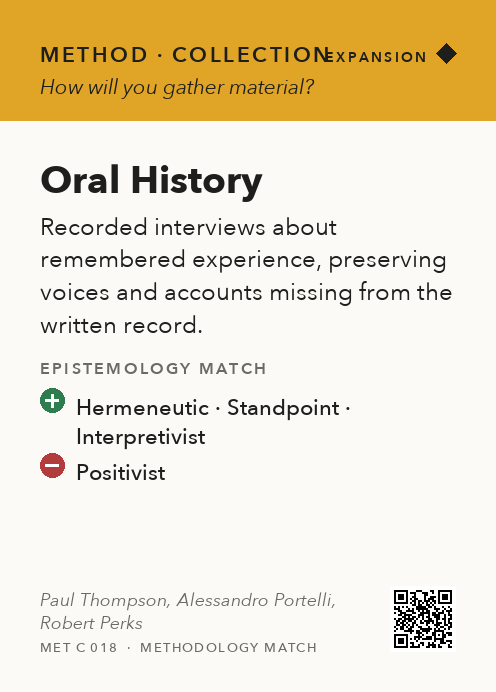
Recorded interviews about remembered experience, preserving voices and accounts missing from the written record.
- +Fits Hermeneutic Epistemology, Standpoint Epistemology, Interpretivist Epistemology
- –Tension with Positivist Epistemology
Key thinkers: Paul Thompson, Alessandro Portelli, Robert Perks
The longer story
Oral history records personal accounts of past events and experiences. You're not after 'objective facts'—memory is selective, reconstructive, meaningful. That's the point: how people make sense of their past. Life story methods capture biographical trajectory; event-focused interviews explore specific moments. The recording preserves voice, pauses, emotion. Oral history is essential for histories that didn't make the official archive—everyday creative practice, marginalised communities, experiences that weren't documented at the time.