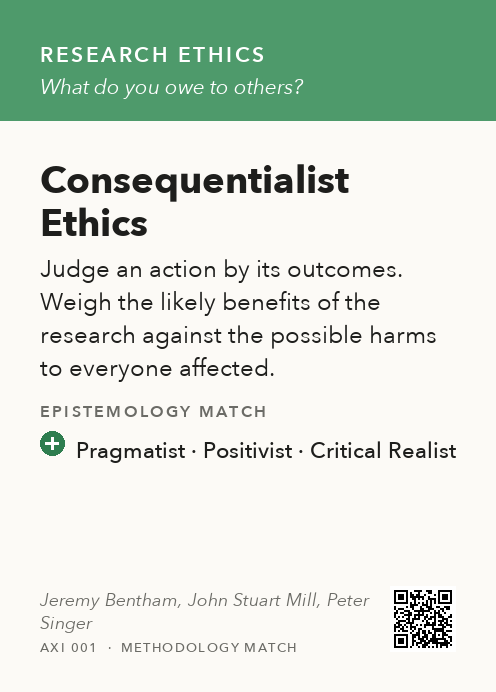
Judge an action by its outcomes. Weigh the likely benefits of the research against the possible harms to everyone affected.
Key thinkers: Jeremy Bentham, John Stuart Mill, Peter Singer
The longer story
Consequentialist ethics asks one question: what happens next? Judge actions by their outcomes—do the benefits outweigh the harms? This is the logic behind every ethics committee's risk assessment. Bentham started counting pleasures and pains in 1789, and we've been arguing about the arithmetic ever since. The strength is clarity: if interviewing someone might cause distress, weigh that against what the research achieves. The weakness is you can't always predict consequences, and some things seem wrong regardless of outcome. But for research involving real people, you'd better think through what your work will actually do to them.