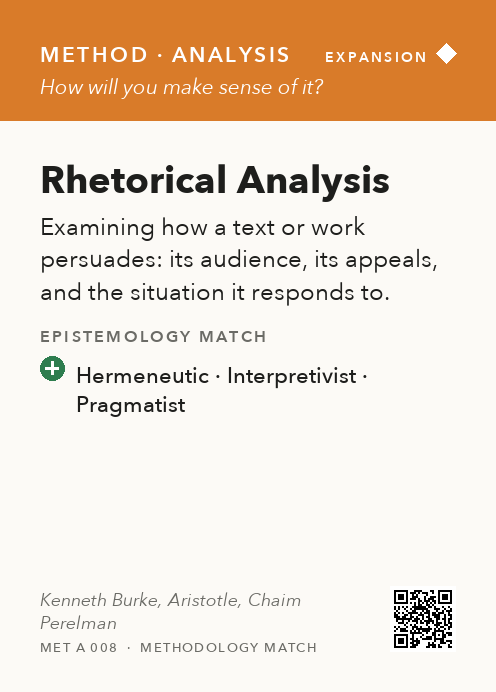
Examining how a text or work persuades: its audience, its appeals, and the situation it responds to.
Key thinkers: Kenneth Burke, Aristotle, Chaim Perelman
The longer story
Rhetorical analysis examines how texts persuade. Aristotle's logos, ethos, pathos remain useful: argument, credibility, emotion. Burke added identification and motive. What strategies does this text use to move its audience? How is the audience constructed? What is taken for granted? Useful for analysing speeches, criticism, marketing, any text designed to influence. The assumption is that all texts position their audiences and work toward effects; rhetorical analysis makes those workings visible.